Development

Making sense of ‘developmentspeak’

Macroprudential regulation is supposed to deal with two major issues: the procyclicality of the financial system, and systemic risk and moral hazard caused by systemically important financial institutions that are considered “too big to fail”. To address procyclicality, the Basel Committee has proposed, beginning with large and connected financial firms, building up additional countercyclical buffers through a combination of countercyclical capital charges, forward-looking provisioning and capital conservation measures. These buffers should be built up in good times and run down in bad, allowing the financial system to absorb emerging strains more easily and dampen amplification mechanisms.*

*An example of developmentspeak taken from UN Secretary General’s Report to the General Assembly on international financial system and development 2010

The language behind international development discussion and debate is notoriously full of jargon.  To assist the process, the BBC World Service Trust has compiled a brief clickable index of terms that appear frequently at all levels – local, national and international.

Check out http://www.bbc.co.uk/worldservice/specials/916_dev_speak/index.shtml

The terms in Guide to Development Speak are listed alphabetically, so just click on any letter for an explanation.

There are also guides on climate change at http://news.bbc.co.uk/2/hi/science/nature/1015162.stm and on migration at http://news.bbc.co.uk/2/hi/in_depth/3527123.stm

AllAfrica.com – Gaddafi, Food for Cartoonists

Gaddafi - Food for cartoonists

Cartoon from AllAfrica.com

Source: http://allafrica.com/photoessay/Gaddafi-Food-for-Cartoonists/#photo


The poor continue to give and the rich continue to receive – the case of Item 18(b)

In a world of obscene inequality we like to think things are getting better and, in some areas, things are indeed improving – literacy, girl’s education, vaccines, ARVs etc. But when it comes to the basics – power and money, same old, same old – the poor lose, the rich win.

Tucked away in the kind of report only insomniac development fundamentalists would read we find what at first sight appears to be a misprint. A report by the Secretary General of the UN to the General Assembly at its 65th session on July 30th, 2010 (‘Item 18(b) )’ of the provisional agenda, Macroeconomic Policy Questions) entitled International Financial System and Development notes that developing countries as a group continued to provide net financial resources to developed countries in 2009, amounting to $US513 billion! Surely this could not be true – the Poor World transferred $US513 billion to the Rich World? In one year? Alas, it was not a typo but a statement of fact.

Without a trace of irony, the report went on to note:

‘…while still substantial, this amount is notably lower than the record high of $883 billion reached in 2008… The decrease reflects the transitory narrowing of global imbalances as a consequence of the global economic and financial crisis. The structure of flows underlying the reversal of the increase in financial transfers in 2009 indicates, for the most part, a disorderly unwinding of accumulated global imbalances.’

However, in case anyone gets jumpy at the downturn, the Secretary General’s Report went on to note that such ‘transfers’ were expected to revert to previous levels with an ‘…expected increase in outward resource transfer from developing countries in 2010’. The estimated figure for 2010 was $US641.2 billion.

The even more interesting Annex to the Report calculated the yearly net transfer to developed economies from developing economies from 1998 to 2010 (estimate) which amounted to a staggering $US5740.6 billion.

And we wonder why the poor stay poor!

See: http://www.un.org/ga/search/view_doc.asp?symbol=A/65/189&Lang=E
The 2011 report (66th session, Item 17(b) of the provisional agenda) is now also available and makes equally astonishing reading

See: http://www.un.org/ga/search/view_doc.asp?symbol=A/65/189&Lang=E


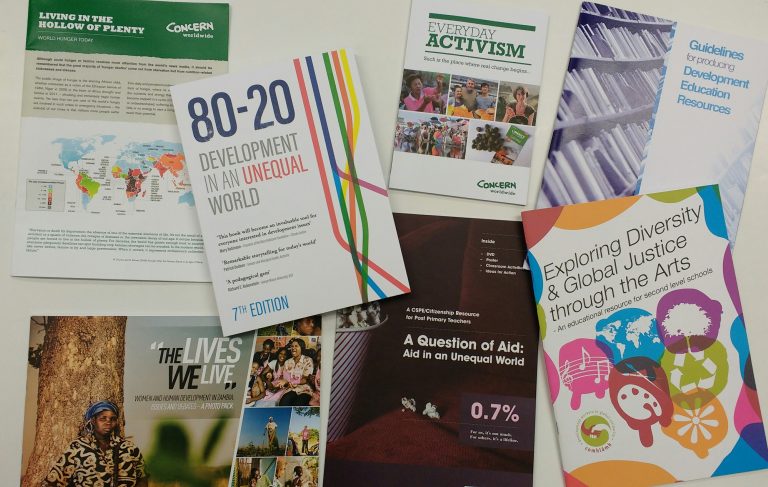
Note: these, and similar issues, will be further reviewed and debated in the forthcoming 6th edition of 80:20 Development in an Unequal World, scheduled for publication in March 2012 by 80:20 Educating and Acting for a Better World and the University of South Africa Press.

Worst countries for sick children

A new report – health workers index – published by UK NGO Save the Children lists those countries worldwide in which it is most dangerous to be a sick child. No great surprises in the results; at the bottom lie Chad, Somalia, LAO PDR, Ethiopia and, unforgivably Nigeria. At the top – Switzerland, Finland, Ireland, Norway and Belarus.

The Health Workers Reach Index measures the availability as well as the use of health workers in 161 countries against two critical life-saving interventions for children – vaccines and skilled birth attendance. It shows that children living in the bottom 20 countries — which fall below the WHO minimum threshold of just over two health workers for every thousand people – are five times more likely to die than those further up the index.

Justin Forsyth, chief executive of Save the Children, argues:

A child’s survival depends on where he or she is born in the world. No mother should have to watch helplessly as her child grows sick and dies, simply because there is no one trained to help.

World Leaders must tackle the health worker shortage and realise that failing to invest in health workers will cost lives. Even the poorest countries in Africa can make real progress if they stick to their pledge of investing 15% of their budgets in health.

See: http://www.savethechildren.org.uk/en/docs/HealthWorkerIndexmain.pdf for more info.

P1

Cartoon satire of ‘development’

What is ‘development’? What is done in the name of development? Who ‘does’ development and who is it done to?

These are just some of the questions explored in a cartoon book launched earlier this year in India by the charity Survival: the movement for tribal peoples. The cartoon book There you go!, written by Oren Ginzburg, satirises the destruction of tribal peoples in the name of ‘development’ and has been designed to be read in two minutes.

The short comic, available for printing as a slideshow below (or for specific pages), challenges some of the underlying assumptions that we might have about expert officials who want to ‘bring sustainable development’ but instead leave the tribal peoples with poverty, pollution and a dependency on welfare.

Mary Robinson, former President of Ireland and former UN High Commissioner for Human Rights, said of the cartoon,

This little book contains the big message that we must avoid the arrogance of presuming to know what’s best for those whose voices are not heard in global debates. It reminds us of our shared responsibility to see to it that all people are active participants in shaping the decisions that impact their lives. Only then can we hope to see real development.

Download, share and explore the issues further in your classroom or on your blog and join in the discussion!
•    Is this what ‘development’ looks like in practice?
•    What do you think of what Mary Robinson said?
•    What would you do differently if you were the briefcase-wielding official?